



Gravitational facial ptosis and methods of correction
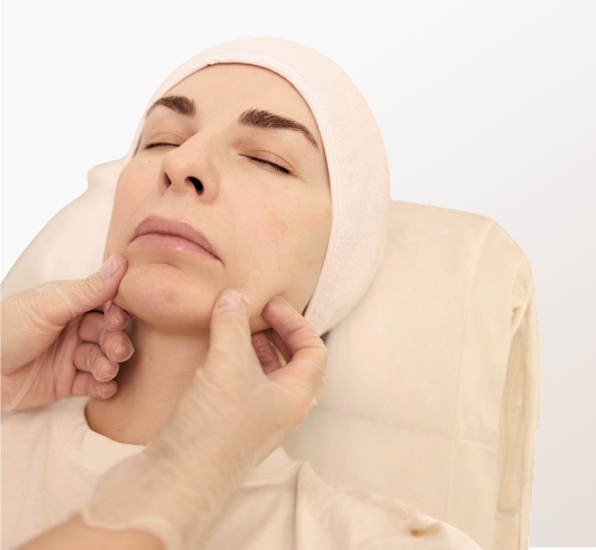
We can easily distinguish a young face from a mature one – a clear oval, tight contours, no sagging, raised corners of the mouth. With age, these features gradually disappear, and the features become softer, and sometimes tired-looking.
These changes are called gravitational ptosis of the face — a process in which soft tissues gradually descend under the influence of gravity. This is a natural but not hopeless process. Understanding its mechanisms will help slow down age-related changes and preserve youthfulness longer without radical interventions.
What is facial ptosis?
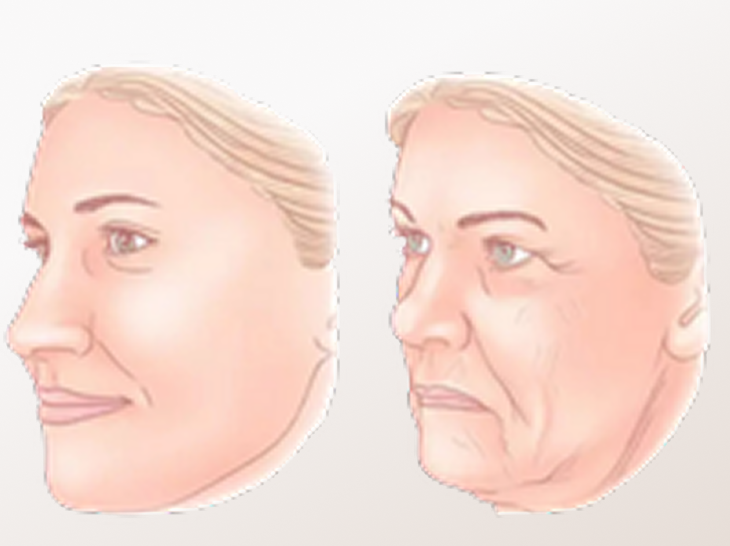
The word ‘ptosis’ is translated from Greek as ‘drooping of the face.’
Gravitational facial ptosis is the loss of tone in the ligaments and tissues, causing the oval of the face to become less defined, the cheeks to droop, and the chin to appear larger.
This is not a disease, but part of the natural ageing process, which can be mitigated in a timely manner. However, before choosing correction methods, the doctor must determine whether facial ptosis is actually present and at what stage it is. The effectiveness of further actions depends on this.
For your convenience, we have prepared a brief video overview with the main points.
How to understand that you have facial ptosis
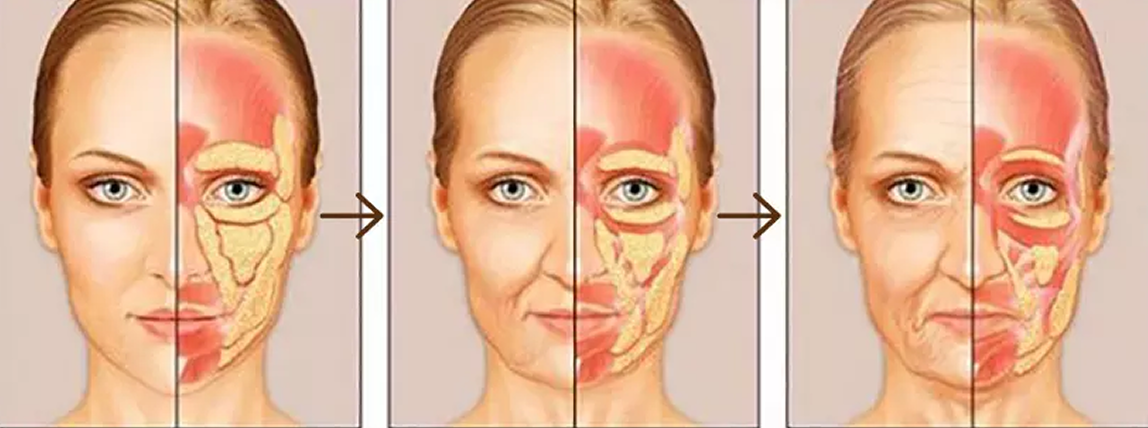
The first signs of gravitational ptosis often appear imperceptibly:
- slight drooping of the corners of the mouth;
- softer cheek contours;
- the face sags and loses its freshness.
Over time, the changes become more noticeable, and even with well-groomed skin, features lose their clarity.
To correctly determine the stage of facial ptosis, it is worth contacting a cosmetic medicine clinic. A cosmetologist or dermatologist will conduct an examination, determine the type of ageing and offer a personalised plan for care or correction of age-related changes (for example, skin tightening without surgery).
Why does facial ptosis begin (causes)
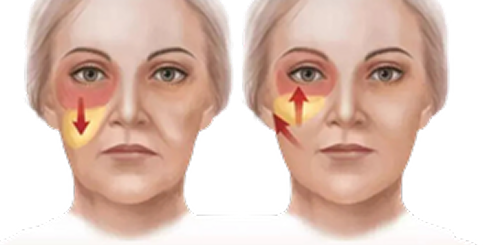
Over the years, the body gradually loses its ability to resist gravity. Supportive ligaments stretch, muscles weaken, skin loses elasticity, and the collagen framework breaks down. As a result, the eyebrows and cheeks droop, nasolabial folds, jowls, a double chin and wrinkles around the mouth appear.
Adipose tissue plays an additional role:
- Deep fat (supportive, conditionally good) – with age, it decreases, and the face sags, losing volume in physiological areas.
- Superficial fat (conditionally bad) — on the contrary, becomes looser and shifts downward, emphasising sagging.
Genetics also play an important role — they determine the type of ageing, the structure of the joints, and the relief of the bones and cheekbones.
If the face sags, the process is accelerated by bad habits, chronic fatigue, lack of sleep, sun exposure, stress, and poor nutrition.
Types of facial ageing
There are several types of age-related changes, each with its own characteristics:
The most common in our latitudes, characteristic of people with thick skin and more rounded features. It is characterised by noticeable sagging of the tissues, the formation of ‘jowls’ and a double chin. The advantage of this type is that wrinkles appear late, and the skin remains thick and elastic for a long time.
In aesthetic cosmetology, this type of ageing is considered the most natural and easily corrected. It is characteristic of people with thin faces. The main signs are decreased muscle tone, nasolabial folds, drooping of the face near the corners of the lips, and the formation of ‘marionette’ wrinkles.
In aesthetic cosmetology, this type of ageing is considered the most natural and easily corrected. It is characteristic of people with thin faces. The main signs are decreased muscle tone, nasolabial folds, drooping of the face near the corners of the lips, and the formation of ‘marionette’ wrinkles.
This is the most delicate process, so people prone to this type of change are usually said to be ageing well. Deformities are minimal, but numerous fine wrinkles appear all over the face.
A doctor at the Esteva Clinic aesthetic medicine clinic will help you determine your individual type of ageing. The specialist will assess the condition of your skin and deep tissues and give you professional recommendations.
How to get rid of facial ptosis
With age, it is important not just to fight the signs of ageing, but to take proactive measures.
Proper skin care at home, as well as regular cosmetic procedures performed by an experienced specialist, allow you to preserve your youth without radical interventions and invasive procedures. Together, these measures provide effective prevention of ageing.
If you notice even the slightest signs of ageing, consult a qualified cosmetologist. They will assess the condition of your skin and soft tissues, select rejuvenating procedures if necessary, and recommend high-quality home care.
How to cure ptosis without surgery
Today, aesthetic medicine in Kyiv offers a variety of non-surgical solutions that help slow down gravitational changes. Thanks to modern technologies, it is possible to:
- improve skin tone;
- reduce the depth of wrinkles;
- restore the clarity of the oval without surgical intervention.
Quick skin tightening without surgery has long been a reality!
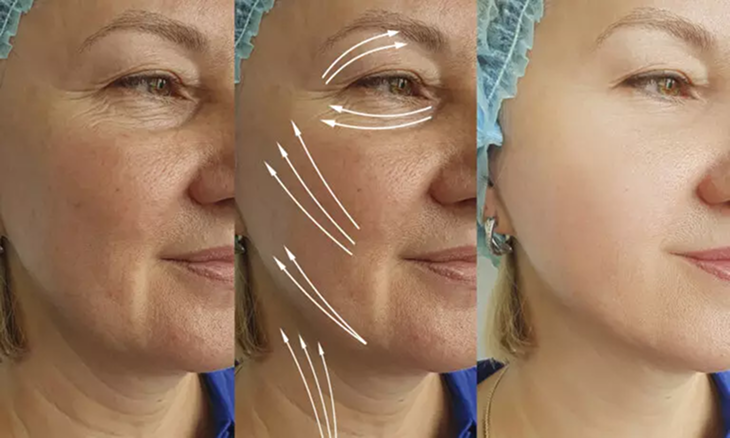
However, the best approach is prevention.
Don’t wait until the signs of gravitational ptosis of the face become obvious. You can start supporting your skin as early as 25-30 years old — this is when the future ‘youth resource’ of the skin is laid down.
Regular consultations with a cosmetologist will help you monitor the condition of your face, slow down the ageing process and choose the right skin care routine at home.
The best treatments for gravitational facial ptosis
Our aesthetic medicine and dermatology clinic in Kyiv offers effective hardware and injection cosmetic procedures that help restore the clarity of the oval, restore skin elasticity and natural youthfulness of the face:
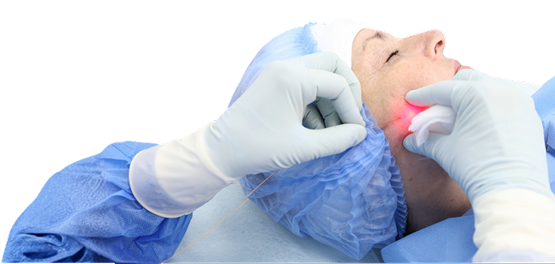
A modern laser technique that affects the deep layers of the skin – without incisions or rehabilitation. The laser beam stimulates neocollagenesis, melts excess fat and simultaneously tightens the skin from within. After just one procedure, the contours of the face become more defined, and the effect gradually intensifies over several months.
Only plastic surgery can be more effective than the Endolift procedure!
More about the Endolift procedure
Video about the Endolift procedure
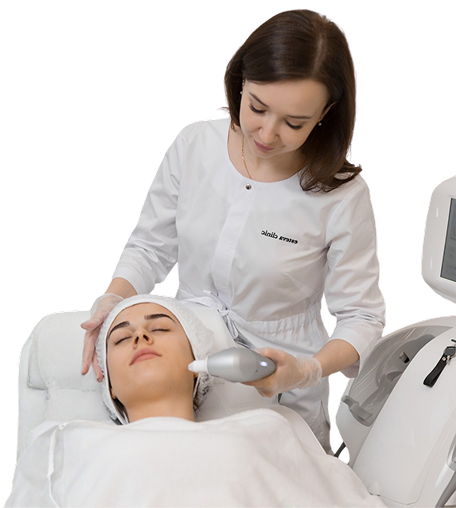
Ultrasound technology that affects the muscular-aponeurotic layer of the face (SMAS), providing a pronounced lifting effect without surgery and quickly. Collagen synthesis is activated at all levels of the skin, improving its density and elasticity. The result lasts up to 2 years.
A distinctive feature of ultrasonic SMAS lifting is that it a truly effective procedure for rejuvenating and lifting the face without significant intervention, suitable for almost everyone.
More about the SMAS lifting procedure
Video about the SMAS lifting procedure
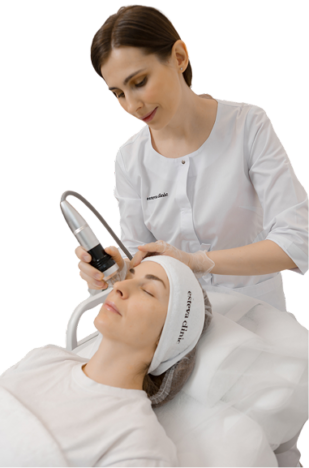
This skin tightening procedure combines micro-punctures with radio wave heating of tissues at a depth of up to 3 cm, which stimulates the production of new collagen and elastin. Already after the first sessions, noticeable skin strengthening and improvement of its relief can be observed. The effect increases over several months and lasts up to 2 years. It is recommended to undergo a course of 3-4 cosmetic procedures with an interval of several weeks.
The procedure successfully corrects facial sagging and combats fine wrinkles on the skin.
More about the microneedle RF lifting procedure
Video about the procedure – Microneedle RF lifting
РRadiesse is an effective means of rapid rejuvenation without surgery for those with noticeable facial ptosis. The calcium hydroxyapatite-based product forms a new skin framework and triggers intensive renewal of collagen fibres. The face takes on a fresh, lifted appearance without losing its natural look.
The skin lift is noticeable immediately and lasts up to 18 months.
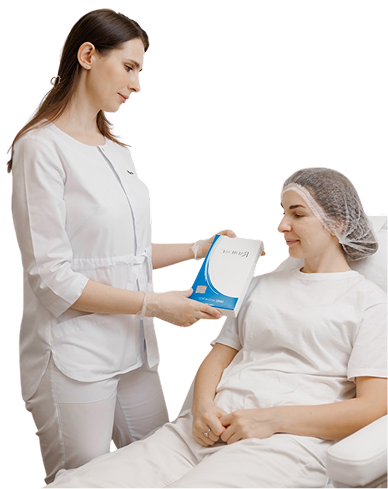
One of the most effective non-surgical methods for combating gravitational ptosis of the face. Special biocompatible threads are used to create a natural framework to support the tissues, providing an instant, pronounced lifting effect. Over time, the threads dissolve, leaving behind a strong foundation of new collagen that maintains the shape of the face for up to 2 years.
If you want instant results, Radiesse injections and thread lifting are just what you need.
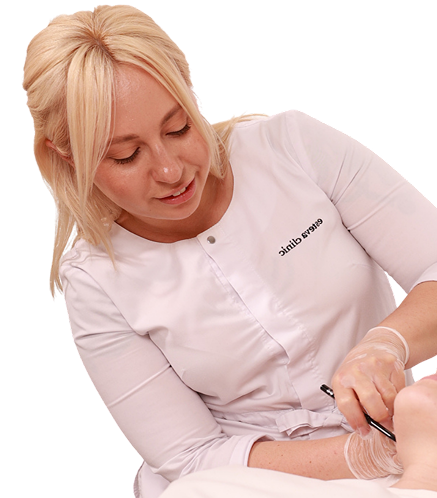
More about the thread lift procedure
Video about the thread lift procedure
If you want to get rid of gravitational facial ptosis quickly and without surgery, sign up for an individual consultation at the Esteva Clinic aesthetic medicine clinic.
We will select skin care or optimal cosmetic procedures specifically for your type of ageing to restore your face’s clear features!